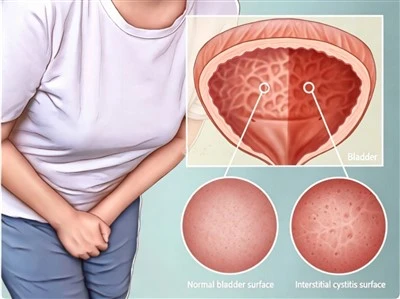
Diagnosis of Interstitial Cystitis centers on "excluding other diseases plus cystoscopy with hydrodistention".
The diagnosis of interstitial cystitis requires a combination of symptom assessment, exclusion of other diseases, and specific examinations. Currently, Cystoscopic Examination is one of the key methods to identify bladder mucosal changes. In addition, Hydrodistention for Interstitial Cystitis helps observe submucosal hemorrhages or Hunner's lesions. Uroflowmetry is used to evaluate whether voiding function is secondarily affected. The three core approaches are described below.
Cystoscopic Examination
Cystoscopic Examination involves inserting a lighted endoscope through the urethra into the bladder to directly visualize the bladder mucosa. In patients with interstitial cystitis, this procedure may reveal normal mucosa, diffuse congestion, or characteristic Hunner's lesions. The examination is usually performed under local anesthesia or sedation and is invaluable for ruling out bladder tumors, stones, or other organic diseases.
During this procedure, the physician carefully inspects the entire bladder wall, noting any areas of redness, fissuring, or ulceration. A key finding in non‑ulcerative IC is the presence of "glomerulations" (pinpoint hemorrhages), but these often require bladder distention to become visible. If performed under general anesthesia, biopsies may be taken to exclude carcinoma in situ. This method is invasive but has a low complication rate and is currently considered a diagnostic reference standard. A negative result in a strongly symptomatic patient does not completely rule out IC; clinical judgment remains essential.

Hydrodistention for Interstitial Cystitis
Hydrodistention for Interstitial Cystitis is performed by slowly infusing fluid into the bladder during the endoscopic view, maintaining the distention for several minutes, then draining and re‑inspecting the mucosa. This test reveals petechial hemorrhages ("glomerulations") that are invisible under standard endoscopic inspection and is a key diagnostic criterion for non‑ulcerative IC. It also has a temporary therapeutic effect; some patients experience symptom relief for weeks to months afterward.
This distention test is typically conducted under general or regional anesthesia to ensure patient comfort and complete pelvic floor relaxation. The infusion pressure is generally kept below 80 cmH₂O and maintained for 1‑2 minutes. If extensive, diffuse petechial hemorrhages (≥10 per quadrant) appear after the procedure and other causes are ruled out, the diagnosis of IC is strongly supported. It should be noted that this test may cause transient hematuria or painful urination, which usually resolves spontaneously. For patients with diagnosed ulcerative IC, this technique is often performed before electrocautery or laser treatment to define the lesion extent.

Uroflowmetry
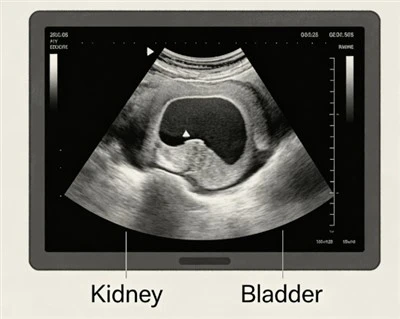
Uroflowmetry is a non‑invasive screening test of voiding function. The patient urinates into a special device when feeling the urge, and the device records the urine flow rate over time. This test is primarily used to assess the presence of bladder outlet obstruction or detrusor underactivity. In interstitial cystitis patients, the result is usually normal or near‑normal, unless the patient has altered voiding patterns due to pain or urethral spasm.

This measurement should be repeated at least twice to improve reliability. Key parameters include maximum flow rate (Qmax), average flow rate, voided volume, and flow time. If the maximum flow rate is significantly reduced despite normal voided volume, further urodynamic study is indicated to rule out obstruction or detrusor dysfunction. This technique is non‑invasive and inexpensive, but it cannot diagnose IC alone; it is only an auxiliary tool to exclude other lower urinary tract dysfunctions. Before the test, patients are instructed to hold a sufficient volume (typically 150‑400 mL) and to void in a private environment to minimize psychological interference.
In other words, proper use of Diagnosis of Interstitial Cystitis avoids misdiagnosis and guides further treatment.

Frequently Asked Questions (FAQ)
Q1: What is the most accurate test for diagnosing interstitial cystitis?
A: No single test is perfect. A specialist usually begins with a detailed history and urinalysis to exclude infection. The endoscopic observation of the bladder lining, especially after fluid distention, remains the central diagnostic method. The non‑invasive flow recording helps determine whether other voiding abnormalities exist.
Q2: If the flow recording test is normal, can interstitial cystitis be ruled out?
A: No. That test mainly screens for physical blockages in the urethra or bladder neck and for detrusor strength. The core pathology of interstitial cystitis lies in the bladder lining and sensory nerves, which usually do not affect urine flow speed. Therefore, a normal flow result does not exclude the disease.
Q3: Do I need all three examinations?
A: Not necessarily. In typical cases, a clinical diagnosis can often be made based on symptoms and exclusion tests. Only when treatment fails or differentiation from other diseases (e.g., bladder cancer, tuberculosis, cystitis glandularis) is needed, would these examinations be performed stepwise. Your physician will select the most necessary ones based on your specific situation.
Hot Tags: diagnosis of interstitial cystitis, China, price, pricelist, quotation, cost