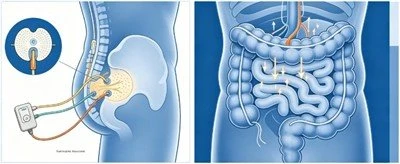
Neurogenic bladder diagnosis requires more than identifying urinary symptoms. A structured evaluation examines bladder function, urinary emptying, and possible neurological or anatomical causes. Our diagnostic overview covers five assessment methods: renal and bladder ultrasonography, cystometry, lumbosacral spine MRI, cystourethroscopy, and post-void residual volume measurement.
The appropriate combination depends on the patient's symptoms, medical history, examination findings, and clinical needs. Not every patient requires all five investigations.
Diagnostic Tests for Neurogenic Bladder
1. Renal and Bladder Ultrasonography
Ultrasonography provides an initial assessment of the kidneys and bladder. It can identify hydronephrosis, assess bladder wall thickness, and measure post-void residual urine. These findings help determine whether further functional or invasive investigations may be needed.
2. Cystometry
Cystometry measures detrusor pressure during bladder filling and emptying. It helps assess bladder storage and emptying function, distinguish overactive from underactive detrusor activity, and identify potentially unsafe storage pressures.
3. Lumbosacral Spine MRI
Lumbosacral MRI examines structural abnormalities that may affect the nerves involved in bladder control. Relevant findings may include tethered cord, tumors, syringomyelia, and spinal stenosis. Imaging is particularly relevant when a neurological or neurosurgical cause is suspected.
4. Cystourethroscopy
Cystourethroscopy allows direct examination of the bladder mucosa and urethra, as well as the prostate where applicable. It can identify anatomical abnormalities such as urethral strictures, bladder stones, tumors, trabeculation, and diverticula that may contribute to urinary symptoms.
5. Post-Void Residual Volume Measurement
Post-void residual (PVR) measurement determines how much urine remains in the bladder after urination. It provides information about bladder emptying efficiency and can be repeated during follow-up to monitor changes after treatment.
How the Diagnostic Evaluation Is Selected
A complete diagnostic assessment does not mean performing every available test on every patient.
Renal and bladder ultrasonography and PVR measurement are commonly used for initial screening. More detailed pressure-flow studies and lumbosacral MRI may be considered in complex cases or when surgical evaluation is required. Cystourethroscopy provides additional information when an anatomical obstruction or other structural abnormality needs to be investigated.
The final combination is tailored to the patient's clinical presentation and examination findings. Reviewing existing reports before arranging additional investigations can also help identify which information is already available and what may still need clarification.
Remote Medical Record Review for International Patients
International patients can begin with a remote review of their existing medical information.
The materials available for review may include:
- Previous medical records and physician notes
- Urinary symptom history
- Urodynamic study reports
- Ultrasound and other imaging reports
- Previous treatment and medication history
The medical team reviews the submitted information to provide a preliminary assessment and discuss possible next steps. The center also offers remote consultations and second medical opinions. Its published service information states that a written remote assessment is generally provided within 1–3 business days.
A remote medical assessment is based on the information provided and does not replace an in-person diagnosis. If existing records are insufficient, further examinations or an in-person medical evaluation in China may be discussed.
Clinical Team and Individualized Assessment
The neurogenic bladder service is associated with a clinical team led by Dr. Zhang Yifei, an Associate Chief Physician in urology at the First Affiliated Hospital of Anhui Medical University.
His published professional profile records more than 30 years of clinical experience in urology and related urinary control disorders. The multidisciplinary approach brings together expertise in urology, neurourology, and rehabilitation medicine.
This team-based review supports the assessment of neurological conditions, bladder function, urinary symptoms, and potential treatment suitability. Where appropriate, findings can also inform discussions about sacral neuromodulation and other treatment options.
Request a Neurogenic Bladder Diagnostic Assessment
To begin a case review, submit your existing medical records, neurological diagnosis, urinary symptom history, previous treatment information, and available examination reports.
Our international patient team can help review the submitted information and explain the consultation process and possible next steps.
Start with your existing medical records.
Contact our team to discuss a neurogenic bladder diagnostic assessment and the next steps for medical consultation.
Request a Medical AssessmentRemote assessment does not replace an in-person diagnosis. Further examinations and treatment decisions depend on individual clinical findings.
Hot Tags: neurogenic bladder diagnostic evaluation, China, price, pricelist, quotation, cost, Ischemic Stroke Cerebrovascular Accident, Lumbosacral Spine MRI, neurogenic bladder electrical neurostimulation, neurogenic bladder sacral nerve stimulation, neurogenic bladder stimulation system implant, Suprapubic Cystostomy