1. Sacral Neuromodulation Treatment for Non-Obstructive Urinary Retention
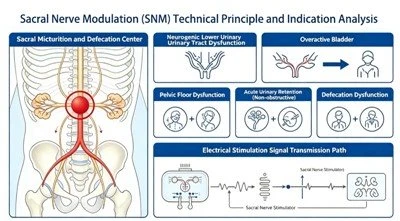
SNM uses controlled electrical stimulation of the sacral nerves to help regulate communication between the nervous system and the bladder. It may be considered for patients who have difficulty emptying their bladder without a physical urinary tract obstruction.
Conditions evaluated for SNM include:
- Non-obstructive urinary retention
- Neurogenic bladder
- Bladder dysfunction associated with spinal cord injury
- Bladder dysfunction associated with neurological diseases
Patient suitability depends on the underlying cause of urinary retention, previous treatment history, and clinical findings. Urinary retention caused by a physical obstruction requires appropriate diagnostic evaluation and management rather than automatic referral for SNM.
2. Patient Evaluation and SNM Test Stimulation
We use a staged treatment process to evaluate whether sacral neuromodulation is appropriate before proceeding with permanent implantation.
Stage 1 – Test Stimulation for Urinary Retention
A temporary electrode is placed near the sacral nerve under local anesthesia with fluoroscopic guidance. The patient uses an external stimulation device for approximately two weeks while symptom changes are monitored.
The evaluation criterion is:
- Symptom improvement of 50% or more: The patient may be considered for permanent implantation, subject to the treating physician's assessment.
- Symptom improvement below 50%: The required response threshold for proceeding to permanent implantation has not been achieved.
The test procedure typically takes less than one hour. This trial allows the patient's response to be evaluated before permanent implantation is considered.
3. Sacral Neuromodulation Implantation Procedure
Patients who achieve the required response during test stimulation may be considered for the second stage.
Stage 2 – Permanent Implantation
A permanent implantable pulse generator (IPG) is placed beneath the skin. The implanted system delivers electrical stimulation to the targeted sacral nerves.
The system has programmable stimulation settings. Physicians can adjust these settings non-invasively according to the patient's clinical response and follow-up needs.
The sacral neuromodulation treatment pathway consists of:
- Review of medical records and clinical assessment.
- Temporary electrode placement.
- Approximately two weeks of test stimulation.
- Evaluation of symptom improvement.
- Permanent implantation when clinically appropriate.
- Post-implant programming and follow-up.
4. Implantable Pulse Generator Options for SNM Treatment
Implantable pulse generator configurations differ in battery type, expected battery life, weight, capacity, and maintenance requirements.
| Device configuration | Battery type | Battery life | Weight | Capacity | Stimulation parameters | Maintenance |
|---|---|---|---|---|---|---|
| Basic non-rechargeable configuration | Non-rechargeable | 6–8 years | 25 g | 1850 mAh | 0–10 V / 0–25 mA | No routine charging |
| Extended-life non-rechargeable configuration | Non-rechargeable | 8–11 years | 35 g | 2500 mAh | Same as the basic configuration; stable output | No routine charging |
| Rechargeable configuration | Rechargeable | 20+ years | 36 g | N/A | 0–10 V / 0–25 mA | Wireless charging every 2–3 months |
The three configurations offer different long-term maintenance arrangements:
- Basic non-rechargeable configuration: A non-rechargeable option with a stated battery life of 6–8 years.
- Extended-life non-rechargeable configuration: A non-rechargeable option with a stated battery life of 8–11 years.
- Rechargeable configuration: A rechargeable option with a stated battery life of more than 20 years.
All three configurations are listed with 1.5T and 3.0T MRI compatibility. Actual MRI eligibility depends on the applicable device labeling and scanning conditions.
The appropriate configuration should be selected by the treating physician based on the patient's condition, stimulation requirements, lifestyle, and long-term treatment plan. These device specifications do not establish that every configuration is suitable for every urinary retention patient.
5. Clinical Team and International SNM Patient Support
Our international patient service combines preliminary medical record review, multidisciplinary assessment, treatment planning, and follow-up support.
Multidisciplinary Clinical Assessment
Our clinical team includes urologists, neuro-urologists, and rehabilitation specialists. Medical history and urodynamic findings can be reviewed together, particularly in complex cases involving neurological conditions and bladder dysfunction.
Medical Record Review
International patients can submit existing medical records for preliminary assessment, including:
- Urodynamic study reports
- Ultrasound and other imaging reports
- Previous treatment records
- Physician notes and diagnostic reports
Our website provides for a written remote assessment within 1–3 business days. This assessment is based on the information supplied and does not replace an in-person diagnosis.
Remote Programming and Follow-Up
After permanent implantation, eligible patients can receive remote programming support after returning to their home country, subject to applicable technical and clinical conditions.
We also provide ongoing communication and annual follow-up support to help patients maintain contact with the clinical team after treatment.
6. Request a Medical Record Review for Urinary Retention
If you have persistent urinary retention and are considering sacral neuromodulation treatment, the first step is to have your medical history and existing test results reviewed.
Send us your available medical records, urodynamic studies, imaging reports, and previous treatment information. Our medical team can assess whether your condition may be suitable for further SNM evaluation and advise on the next clinical steps.
Hot Tags: sacral neuromodulation for urinary retention, China, price, pricelist, quotation, cost, Decrease in urine leakage, Indications For Sacral Neuromodulation, Sacral nerve electrical stimulation procedure, sacral neuromodulation programmer, sacral neurostimulation implant, SNM stage two permanent implant