The Neural Logic of Sacral Neuromodulation – A Common Target Behind Five Indications
Sacral neuromodulation (SNM) is not a "broad‑spectrum anti‑inflammatory" but a precise neuromodulation technique. It can simultaneously improve Neurogenic Lower Urinary Tract Dysfunction, Overactive bladder, Pelvic floor dysfunction, Acute urinary retention (non‑obstructive), and Bowel dysfunction because these five conditions share the same neural hub: the sacral micturition and defecation center. This article explains, from neuroanatomical and clinical perspectives, why these five indications respond to the same bladder pacemaker or bowel pacemaker (often collectively called a sacral nerve stimulator).
Thus, the five Indications for Sacral Neuromodulation all answer one question: does the disorder reflect sacral reflex imbalance?

Neurogenic Lower Urinary Tract Dysfunction – Rebooting a Disconnected Circuit
After spinal cord injury, multiple sclerosis, or stroke, the suprasacral neural pathway is interrupted, causing the bladder to become either overactive (spastic) or underactive (areflexic). SNM implants electrodes via a sacral nerve electrical stimulation procedure to simulate normal afferent signals and help rebuild brain‑bladder communication. Multiple randomized controlled trials have confirmed that, in patients with an intact sacral reflex arc, a bladder stimulator reduces incontinence episodes by more than 50%. In this setting, the sacral nerve stimulator acts as a "neural bridge." For patients with this dysfunction, this approach offers a chance to regain voluntary voiding.

Overactive Bladder – Turning Down False Alarms
Most idiopathic OAB has no organic obstruction; instead, sensory nerves are abnormally sensitive – a small amount of urine in the bladder is interpreted as an "urgent alarm." SNM does not paralyze the bladder but uses continuous low‑frequency electrical pulses to suppress hyperactive afferent C‑fibers. This mechanism, distinct from drugs, is called "neuromodulatory gating." When two or more medications have failed for this condition, a bladder pacemaker is now the highest‑level guideline‑recommended option. Many patients describe it as: "I still urinate, but I am no longer held hostage by my bladder."

Pelvic Floor Dysfunction – Resynchronizing Uncoordinated Sphincters

Acute Urinary Retention (Non‑obstructive) – The Neural Dilemma of "Wanting to Urinate but Unable"

Bowel Dysfunction – More Than a Toilet Problem
Fecal incontinence and refractory constipation are often classified as gastroenterological disorders, but their neural control center is also located at S2‑S4. SNM enhances rectal sensation and the reflex contraction of the internal anal sphincter via a sacral nerve electrical stimulation procedure, with long‑term efficacy exceeding 60% for fecal incontinence; for slow‑transit constipation, it can shorten colonic transit time. Many patients with both urinary and fecal incontinence experience improvement in both symptoms after receiving a single bladder pacemaker – a synergistic benefit of sacral trunk neuromodulation. For this dysfunction, after failed conservative treatment, this therapy is now a standard option.
In short, the five Indications for Sacral Neuromodulation form a spectrum: from overactive to underactive, from incoordination to disconnection.

One Target, Five Benefits
As seen from the five indications above, they are not incidentally covered by SNM but all revolve around the functional axis of sacral nerves – pelvic plexus – target organs. The sacral nerve stimulator can exert both inhibitory effects and excitatory effects (improving urinary retention). This bidirectional modulation is beyond any unidirectional drug. Therefore, when clinicians encounter any of the above conditions that have failed conventional treatment, they should promptly evaluate the feasibility of sacral nerve electrical stimulation procedure. Remember: different disorders, same neural switch.
Frequently Asked Questions (FAQ)
Q1: Which indication has the highest test success rate?
A: Overactive bladder and non‑obstructive Acute urinary retention both achieve >70% success. For this condition, long‑term improvement exceeds 60%.
Q2: Can one device treat both bladder and bowel problems at the same time?
A: Yes. The same implantable pulse generator (a bladder pacemaker or sacral nerve stimulator) manages both. Many patients with Neurogenic Lower Urinary Tract Dysfunction and concurrent this disorder gain dual control.
Q3: Is the test stimulation reversible? What if it fails?
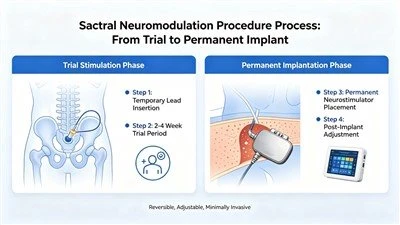
A: Completely reversible. The temporary electrode is removed under local anesthesia in minutes. Failure simply means SNM is unlikely to help you – no permanent device is left inside.
Hot Tags: indications for sacral neuromodulation, China, price, pricelist, quotation, cost, Bladder stimulator, Decrease in urine leakage, How Is Sacral Neuromodulation Performed, Indications For Sacral Neuromodulation, Sacral nerve stimulator, sacral neuromodulation