What Patients Can Expect?
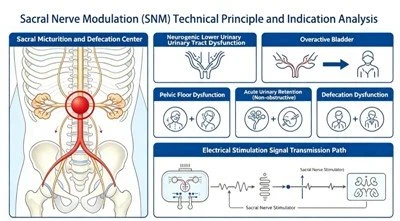
Sacral neuromodulation (SNM) is not only a minimally invasive technique; its treatment outcomes of sacral neuromodulation have been validated in thousands of patients worldwide. The following sections analyze the improvements patients may achieve from four core dimensions.
Treatment outcomes of sacral neuromodulation: the focus is on four key areas: urinary control, voiding recovery, pain relief, and bowel function – most patients notice significant improvement during the trial phase.

Decrease in Urine Leakage – From Leakage to Control
Decrease in urine leakage is one of the most intuitive outcomes of SNM. Whether for urge incontinence or mixed incontinence, most patients observe a reduction in leakage episodes during the trial stimulation period. Clinical data show that approximately 70% of patients experience a ≥50% reduction in daily incontinence episodes. After this improvement, patients' dependence on pads drops significantly, and quality of life improves markedly.

Recovery of Micturition Function – Rebuilding Voluntary Emptying
Recovery of micturition function is critical for patients with urinary retention or voiding difficulty. SNM modulates sacral reflexes to re‑coordinate the detrusor and sphincter. A multicenter study reported that post‑void residual volume decreases by an average of about 100 mL in patients with non‑obstructive retention, and some become completely free of intermittent catheterization. This outcome is not only a symptomatic improvement but also key to bladder protection. When assessing overall results, physicians closely monitor changes in residual volume.
Decrease in Pelvic Pain Severity – Alleviating Chronic Pain
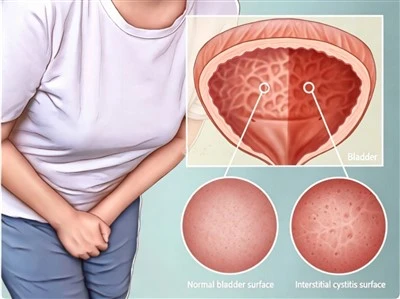
Decrease in pelvic pain severity is of great significance for patients with interstitial cystitis or chronic pelvic pain syndrome. SNM suppresses abnormal afferent signals, reducing central pain perception. Studies report that after six months of stimulation, the average visual analog scale pain score drops by approximately 4 points (on a 10‑point scale). This effect often begins to appear during the trial stimulation period, becoming an important factor in the patient's decision to proceed with a permanent implant.
Neurogenic Bowel Function Recovery – Addressing Bowel Function as Well
Neurogenic bowel function recovery is a highly valuable but sometimes overlooked outcome of SNM. For neurogenic patients with concurrent fecal incontinence or severe constipation, sacral stimulation enhances rectal sensation and improves internal anal sphincter reflexes. Clinical observations show that about 60% of patients with neurogenic fecal incontinence experience a greater than 50% reduction in incontinence days. This improvement usually appears together with improvement in voiding, reflecting the multi‑target advantage of sacral neuromodulation. Overall, the treatment outcomes of sacral neuromodulation benefit patients across urination, defecation, and pain domains.
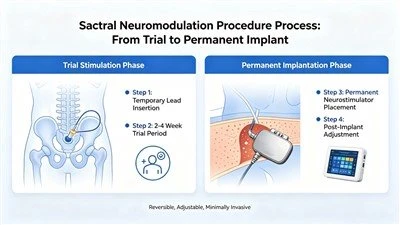
Treatment outcomes of sacral neuromodulation: in other words, they are not "all or nothing" – they can be accurately predicted by the two‑week trial stimulation: ≥50% improvement qualifies for a permanent implant, otherwise there is no loss.
From Decrease in urine leakage, Recovery of micturition function, Decrease in pelvic pain severity, to Neurogenic bowel function recovery, the treatment outcomes of sacral neuromodulation cover multiple dimensions of pelvic floor function. The degree of improvement varies individually, but the trial stimulation phase provides a reliable personalized prediction.

Frequently Asked Questions (FAQ)
Q1: How long does it take to see symptom improvement?
A: Leakage reduction and pain relief usually begin within 3‑7 days. Recovery of voiding function may take 1‑2 weeks. Bowel improvement often appears slightly later, around 2‑4 weeks.
Q2: How long do the outcomes last? Will the effect diminish over time?
A: Most patients maintain long‑term benefit. If effects decrease, they can be optimized via external programming. The outcomes are adjustable.
Q3: If the trial is very successful, will the permanent implant give better results?
A: Generally, results are at least as good. The permanent device provides more stable parameters and fine adjustment.
Q4: What is the exact percentage for bowel function recovery?
A: Approximately 60‑70% of patients achieve ≥50% reduction in fecal incontinence. However, individual variation exists, so a trial stimulation is recommended.
Q5: How can I predict my own outcomes?
A: The most reliable way is to undergo a trial stimulation. During the 2‑week trial, you can objectively record your improvements.
Hot Tags: treatment outcomes of sacral neuromodulation, China, price, pricelist, quotation, cost, Bladder stimulator, Decrease in urine leakage, How Is Sacral Neuromodulation Performed, Pelvic floor dysfunction, Sacral Neuromodulation Surgery, SNM stage two permanent implant