Treatment-resistant overactive bladder (OAB) and urge incontinence
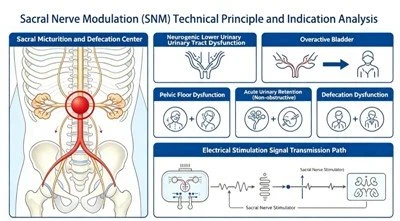
This is the most classic and widely used indication for sacral nerve modulation. The core symptom of OAB is sudden, intense, and uncontrollable urinary urgency, often accompanied by urinary frequency (≥8 times during the day) and increased nocturia. In severe cases, it can lead to urge incontinence-involuntary leakage of urine before reaching the toilet.
These patients have often tried behavioral training, pelvic floor muscle rehabilitation, and various oral medications (such as M receptor antagonists and β3 receptor agonists), but their symptoms remain persistent, or they are forced to discontinue medication due to intolerance to side effects such as dry mouth and constipation. Sacral nerve modulation, by regulating the sacral nerve afferent pathways, inhibits abnormal contractions of the bladder detrusor muscle, significantly reducing the frequency of urinary urgency and the number of incontinence episodes. Clinical data show that its efficacy rate for treatment-resistant OAB is as high as 80%, allowing patients to regain urinary control and completely get rid of the need for incontinence pads.
Non-obstructive urinary retention
In contrast to an "overactive" bladder, patients with non-obstructive urinary retention experience weak bladder contractions or uncoordinated activity of the urethral sphincter and detrusor muscle during urination, resulting in incomplete emptying of the bladder. Symptoms include difficulty urinating, a weak urine stream, dribbling, lower abdominal distension, and a large amount of residual urine in the bladder for a long period, sometimes requiring long-term catheterization.
Crucially, these patients do not have mechanical obstructive factors such as urinary tract stones, benign prostatic hyperplasia, or urethral stricture. Sacral nerve modulation can effectively awaken bladder contraction function, coordinate pelvic floor muscles, help patients regain spontaneous urination, significantly reduce residual urine volume, and even eliminate the need for catheterization. The clinical effectiveness rate is approximately 77%, especially effective for patients with idiopathic urinary retention and Fowler's syndrome (non-neurogenic urethral sphincter spasm).
Fecal Incontinence
Fecal incontinence refers to the involuntary inability to control flatulence and defecation, resulting in the involuntary leakage of feces from the anus. It is a pelvic floor dysfunction that severely impacts a person's dignity and social life. Its causes are complex and may be related to anal sphincter injury, pelvic floor neuropathy, and decreased rectal sensory function.
Sacral nerve modulation surgery stimulates the sacral nerves to regulate the reflex activity of the anal sphincter and rectum, enhancing rectal perception and sphincter control. For patients who do not respond to conservative treatments (such as pelvic floor training, medication, and biofeedback), SNM is an internationally recognized first-line surgical option with a clinical efficacy rate of up to 85%, significantly reducing the frequency of incontinence and helping patients regain defecation control.
Chronic Constipation (Slow Transit/Defecation Disorder Type)
For chronic refractory constipation unresponsive to conventional treatments, especially slow transit constipation (slow colonic peristalsis, <3 bowel movements per week) and defecation disorder constipation (paradoxical contractions of the pelvic floor muscles leading to straining during defecation), sacral nerve modulation surgery demonstrates unique value.
It improves colonic transit function and coordinates the movements of abdominal muscles, rectum, and anal sphincter by regulating the intestinal and pelvic floor muscles innervated by the sacral nerve, thus relieving symptoms such as straining during defecation, anal obstruction, and constipation. For patients who have long relied on laxatives or enemas, or even those experiencing bloating, abdominal pain, and loss of appetite due to constipation, SNM can effectively restore regular bowel movements and improve intestinal health.
Interstitial Cystitis / Bladder Pain Syndrome
This is a chronic inflammatory disease of the bladder with an unknown etiology. The core symptoms are persistent pain in the bladder area or pelvis, which worsens when holding urine and is relieved after urination, accompanied by severe urinary frequency and urgency. Patients have abnormally increased sensitivity of the bladder mucosa, with even slight urine storage causing severe pain, seriously affecting sleep and quality of life.