Treatment options for overactive bladder follow a "stepwise escalation" principle: from non‑invasive to invasive, from conservative to implantable.
Intravesical Botulinum Toxin Injection
Intravesical Botulinum Toxin Injection is a procedure that delivers a neurotoxin directly into the detrusor muscle via a cystoscope. This option is suitable for patients with refractory overactive bladder who do not respond adequately to oral medications.
This procedure is usually performed under local anesthesia. The physician inserts a fine needle into multiple sites of the detrusor muscle, delivering a total dose of about 100‑200 units. Onset of action occurs a few days to one week later, significantly reducing urgency and frequency episodes. The main side effect is temporary urinary retention (about 5‑10% of patients may need a temporary catheter). The effect lasts 6‑9 months, and repeat injections can be given thereafter.

Intravesical Instillation Therapy
Intravesical Instillation Therapy involves instilling medication directly into the bladder through a urethral catheter, allowing full contact with the bladder lining. Commonly used agents include hyaluronic acid, heparin, and lidocaine, which help reduce sensory hypersensitivity.
This therapy is typically given once weekly for 6‑8 weeks as an initial course. Before the procedure, the bladder is emptied, and the solution is retained for 15‑30 minutes before voiding. Common transient effects include mild frequency, urgency, or urethral burning, which usually resolve spontaneously. For patients who cannot tolerate oral drugs, this method serves as an effective second‑line option.

Percutaneous Tibial Nerve Stimulation
Percutaneous Tibial Nerve Stimulation is a minimally invasive treatment that involves inserting a thin needle near the posterior tibial nerve and connecting it to a low‑frequency electrical stimulator. Patients receive one 30‑minute session per week for 6‑12 weeks.
This treatment is performed in an outpatient clinic without anesthesia. By stimulating the tibial nerve in the leg, it indirectly inhibits bladder afferent activity, thereby reducing urgency and frequency. Side effects are mild, occasionally including local pain or bruising at the needle site. This is a good alternative for patients who are unwilling or unable to undergo an implantable device.

Sacral Neuromodulation Procedure
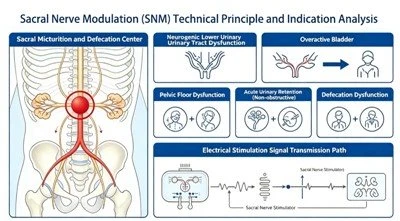
Sacral Neuromodulation Procedure is an implantable neuromodulation technique that uses electrical stimulation of the sacral nerves to improve bladder storage and emptying. This therapy is intended for refractory patients who still suffer from severe symptoms after adequate conservative treatments.
This procedure has two stages: Stage One is a temporary electrode test to assess symptom improvement by ≥50%; if successful, Stage Two – permanent implantation – is performed. This method significantly reduces frequency, urgency, and urge incontinence episodes, with a success rate of approximately 70‑80%. The device is reversible and adjustable; even unsatisfactory results can be returned to baseline.
In other words, choosing the right treatment options for overactive bladder requires balancing efficacy, side effects, and patient preference for individualized care.

Frequently Asked Questions (FAQ)
Q1: After the local neurotoxin injection, could I be unable to urinate?
A: A small percentage of patients (about 5‑10%) may experience temporary difficulty emptying the bladder and need a urinary catheter for a few days. Your physician will adjust the dose to minimize this risk.
Q2: Does percutaneous nerve stimulation require hospitalization?
A: No. It is performed in an outpatient clinic, each session lasts about 30 minutes, and you can return home immediately afterwards.
Q3: Does the electrical nerve stimulation device require surgery for implantation?
A: Stage One involves only a needle puncture under local anesthesia to place a temporary electrode – no incision. Stage Two permanent implantation requires a small incision, usually with a 1‑2 day hospital stay.
Hot Tags: treatment options for overactive bladder, China, price, pricelist, quotation, cost, Cystoscopy, Intravesical Botulinum Toxin Injection, Nighttime urination, Oliguria, overactive bladder, Post Void Residual Measurement