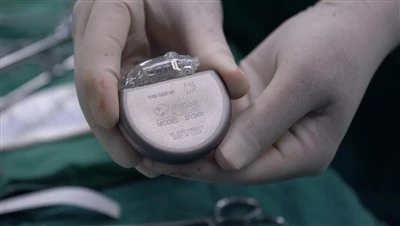
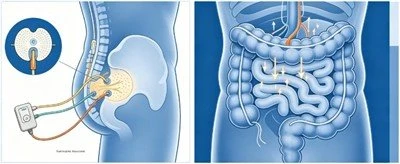
Temporary Sacral Neuromodulation Testing allows patients to evaluate their response to sacral nerve stimulation before considering permanent implantation. This temporary SNM trial uses a temporary electrode placed near the sacral nerve under local anesthesia and fluoroscopic guidance. Patients use an external stimulator for approximately two weeks while their symptoms are monitored.
Patients who achieve at least 50% symptom improvement during the trial may proceed to clinical evaluation for the second-stage permanent implant.
1. Patient Eligibility for Temporary SNM Testing
Temporary SNM testing may be considered for patients with urinary or bowel dysfunction who have not obtained sufficient relief from conservative treatment, medication, or physical therapy.
Conditions evaluated for sacral neuromodulation include:
- Refractory overactive bladder
- Neurogenic bladder
- Urge urinary incontinence
- Non-obstructive urinary retention
- Interstitial cystitis
- Chronic pelvic pain syndrome
- Fecal incontinence
- Refractory constipation
Eligibility depends on the patient's diagnosis, previous treatment response, diagnostic findings, and individual clinical assessment. A diagnosis alone does not establish suitability for temporary testing.
2. Temporary Sacral Neuromodulation Testing Procedure
The first-stage SNM test stimulation procedure involves temporary electrode placement followed by external stimulation.
The procedure includes:
- Local anesthesia: The procedure is performed under local anesthesia.
- Electrode placement: A temporary electrode is positioned near the sacral nerve.
- Fluoroscopic guidance: Imaging guidance is used during electrode positioning.
- External stimulation: The patient uses an external stimulator throughout the trial period.
- Symptom monitoring: The patient's symptoms are evaluated to determine the response to stimulation.
The procedure typically takes less than one hour. The external stimulation trial lasts approximately two weeks.
3. Temporary SNM Testing Specifications
The following table summarizes the published clinical procedure and testing conditions.
| Parameter | Temporary Testing Details |
|---|---|
| Treatment stage | Stage 1 – Test Stimulation |
| Electrode type | Temporary electrode |
| Electrode placement | Near the sacral nerve |
| Anesthesia | Local anesthesia |
| Positioning guidance | Fluoroscopy |
| Procedure duration | Typically within 1 hour |
| Stimulation equipment | External stimulator |
| Testing duration | Approximately 2 weeks |
| Evaluation method | Assessment of symptom improvement |
| Threshold for second-stage evaluation | At least 50% symptom improvement |
The 50% improvement threshold is the published criterion for considering progression to permanent implantation, subject to further clinical evaluation.
4. Test Results and Permanent Implantation Criteria
Temporary SNM testing is the first stage of a two-stage sacral neuromodulation treatment process. The patient's response during the trial helps determine whether permanent implantation should be considered.
Stage 1 – Temporary Test Stimulation
The patient uses an external stimulator for approximately two weeks while symptoms are monitored and evaluated.
Stage 2 – Permanent Implant Evaluation
Patients achieving at least 50% symptom improvement during the trial may proceed to clinical evaluation for permanent neurostimulator implantation.
Patients who do not reach this threshold require further clinical review rather than automatic progression to the second stage.
5. Clinical Assessment and International Patient Support
International patients considering temporary sacral neuromodulation testing in China can arrange a remote medical record review before traveling for treatment.
Available support includes:
- Remote medical record review: Patients can submit imaging, urodynamic studies, and physician notes for preliminary assessment.
- Written assessment: A written remote assessment is typically provided within 1–3 business days.
- Multidisciplinary evaluation: Urology, neuro-urology, and rehabilitation specialists contribute to the assessment of complex cases.
- English-language communication: International patients can communicate with the English-speaking medical team.
- Treatment planning: Recommendations are based on the patient's medical history and diagnostic findings.
Remote assessment helps determine whether further in-person evaluation is appropriate. It does not replace a physical examination or establish a definitive diagnosis.
6. Request an Assessment for Temporary Sacral Neuromodulation Testing
To request an initial assessment, submit your available medical records, including previous diagnostic reports, urodynamic studies, imaging results, physician notes, and a brief description of your symptoms and previous treatments.
Our international patient service team can arrange a remote medical assessment and help coordinate the next steps if further evaluation or treatment in China is appropriate.
Contact us with your existing medical records to request an initial assessment for Temporary Sacral Neuromodulation Testing.
Hot Tags: temporary sacral neuromodulation testing, China, price, pricelist, quotation, cost, Recovery of micturition function, Removable sacral electrode implantation, sacral neuromodulation generator, Sacral Neuromodulation Surgery, sacral stimulation pulse generator, SNM stage two permanent implant