Sacral Neuromodulation for Neurogenic Bladder-Related Urinary Incontinence
For selected patients with neurogenic bladder-related urinary incontinence, sacral neuromodulation (SNM) offers a treatment option based on a two-stage process: temporary test stimulation followed by permanent implantation when the test demonstrates sufficient symptom improvement. We provide remote medical record reviews, preliminary treatment assessments, and follow-up support for international patients considering this approach.
When Is Sacral Neuromodulation Worth Considering?
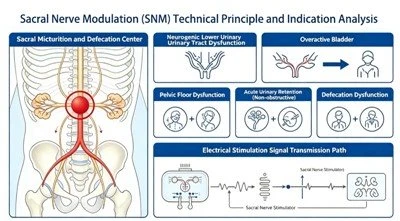
Neurogenic bladder can develop following spinal cord injuries, congenital neurological abnormalities, stroke, Parkinson's disease, and other conditions affecting bladder nerve control.
Patients may experience:
- Urinary urgency and frequency
- Urge urinary incontinence
- Difficulty emptying the bladder
- Non-obstructive urinary retention
- Persistent urinary leakage associated with neurological dysfunction
SNM may be considered for selected patients whose bladder symptoms remain difficult to manage with conservative treatments or medication. The underlying neurological condition, bladder function, previous treatments, and individual medical history must be evaluated before determining treatment suitability.
Clinical Evaluation Before Sacral Neuromodulation Treatment
Our medical service supports preliminary assessment based on the patient's existing medical records.
Relevant evaluation materials include:
| Evaluation Item | Information Reviewed |
|---|---|
| Medical history | Neurological diagnosis, onset of symptoms, and previous treatments |
| Urodynamic studies | Bladder storage and emptying function |
| Urinary symptoms | Urgency, frequency, leakage, and retention |
| Imaging reports | Relevant urinary tract and neurological findings |
| Previous treatment records | Medication, catheterization, and other treatment outcomes |
Patients can submit existing examination reports and physician notes for preliminary remote assessment. An in-person evaluation may be required when the available records are insufficient.
Two-Stage Sacral Neuromodulation Treatment
SNM treatment follows two main stages. The response to temporary stimulation determines whether permanent implantation should proceed.
Stage 1: Test Stimulation
A temporary electrode is positioned near the sacral nerve under local anesthesia and fluoroscopic guidance. The patient uses an external stimulation device for approximately two weeks.
During this period, changes in urinary symptoms are monitored to evaluate the treatment response.
The key decision criterion is symptom improvement:
- Improvement of 50% or more: Permanent implantation may be considered.
- Improvement below 50%: The medical team reviews the response before deciding on further treatment.
The test procedure typically takes approximately one hour, although individual arrangements depend on clinical circumstances.
Stage 2: Permanent Implantation
When the test stimulation produces at least 50% symptom improvement, permanent implantation may be considered.
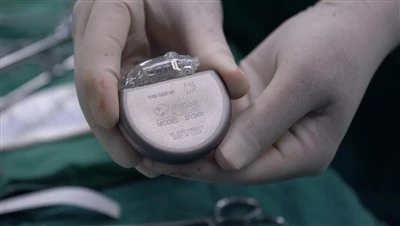
The neurostimulator is implanted subcutaneously and connected to an electrode positioned near the sacral nerve. Its stimulation parameters can be adjusted through programming without another implantation procedure.
The treatment plan and implantation decision remain subject to the patient's clinical assessment.
Implantable Neurostimulator Options for Neurogenic Bladder Treatment
The available device configurations differ in battery type, operating life, weight, and charging requirements.
| Device Model | Battery Type | Published Battery Life | Weight | Battery Capacity | Stimulation Parameters |
|---|---|---|---|---|---|
| G132 | Non-rechargeable | 6–8 years | 25 g | 1850 mAh | 0–10 V / 0–25 mA |
| G131 | Non-rechargeable | 8–11 years | 35 g | 2500 mAh | 0–10 V / 0–25 mA |
| G134R | Rechargeable | 20+ years | 36 g | Not specified | 0–10 V / 0–25 mA |
Additional device differences:
| Feature | G132 | G131 | G134R |
|---|---|---|---|
| Routine charging | Not required | Not required | Wireless charging |
| Charging frequency | N/A | N/A | Once every 2–3 months |
| Published MRI compatibility | 1.5T and 3.0T | 1.5T and 3.0T | 1.5T and 3.0T |
G132 and G131 use non-rechargeable batteries, while G134R uses a rechargeable battery. The published battery life and weight also differ between the three models.
The appropriate configuration depends on the patient's treatment requirements, expected duration of use, charging preferences, and individual clinical circumstances. MRI compatibility must be confirmed against the specific device labeling and applicable scanning conditions.
Remote Programming and International Patient Follow-Up
Follow-up support is an important consideration for patients who receive treatment in another country.
Our international patient service includes:
- Remote medical record review before treatment.
- English-language communication with the medical team.
- Treatment planning based on individual clinical findings.
- Remote programming support after implantation.
- Ongoing communication and follow-up after patients return home.
Remote programming is available for supported implanted systems, allowing stimulation settings to be adjusted without requiring patients to return for every routine adjustment. Actual availability depends on the device configuration and applicable technical conditions.
Medical Team and Treatment Support
Our medical team information identifies Dr. Zhang Yifei as an Associate Chief Physician with more than 30 years of clinical experience in urology and complex urinary control disorders.
His clinical work focuses on neuro-urology, urinary incontinence, voiding dysfunction, and sacral neuromodulation.
For complex neurogenic bladder cases, the evaluation involves urologists, neuro-urologists, and rehabilitation specialists. This multidisciplinary approach allows the team to review neurological history, urinary symptoms, and urodynamic findings when developing an individualized treatment plan.
For international patients, we also provide assistance with medical record submission, English-language communication, preliminary assessment, and treatment coordination.
Request a Neurogenic Bladder Case Assessment
If you have urinary incontinence associated with neurogenic bladder and are considering sacral neuromodulation, you can begin with a review of your existing medical records.
Send us your available urodynamic reports, imaging results, previous treatment records, and a brief description of your urinary symptoms. Our medical team can review the information and provide a preliminary assessment of potential treatment options.
Submit Your Medical Records to Request a Remote Medical Assessment.
Contact Our International Patient TeamRemote assessments are based on the information provided and do not replace an in-person diagnosis. Treatment suitability, device selection, and clinical outcomes vary between patients.
Hot Tags: urinary incontinence associated with neurogenic bladder, China, price, pricelist, quotation, cost, Hydronephrosis, neurogenic bladder nerve stimulator, neurogenic bladder sacral nerve stimulation, neurogenic bladder sacral nerve stimulation device, Renal and Bladder Ultrasonography, Tethered Cord Syndrome