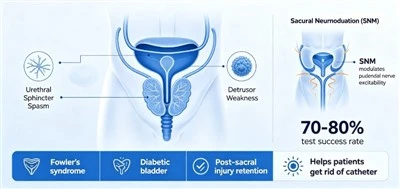
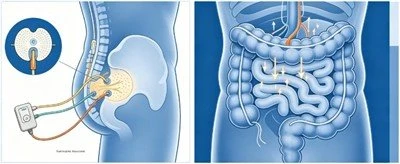
For patients with neurogenic bladder following spinal cord injury, treatment selection depends on neurological injury, bladder storage and emptying function, and upper urinary tract risk. Sacral neuromodulation (SNM) may be considered in selected neurological conditions, but it is not a universally recommended treatment for spinal cord injury-related bladder dysfunction. At Hefei Youce Haoyi Culture Co., Ltd., we provide clinical assessment, treatment consultation, and coordinated follow-up for patients with complex bladder dysfunction.
Clinical Assessment for Neurogenic Bladder After Spinal Cord Injury
Spinal cord injury can disrupt the neurological signals controlling bladder storage and emptying. Depending on the injury, patients may experience urinary retention, urinary incontinence, increased bladder pressure, or impaired bladder emptying.
Our assessment of neurogenic bladder after spinal cord injury considers the patient's neurological history, urinary symptoms, bladder function, previous treatment, and available examination results.
The diagnostic examinations available for clinical evaluation include:
| Examination | What It Evaluates |
|---|---|
| Renal and Bladder Ultrasonography | Hydronephrosis, bladder wall thickness, and post-void residual urine |
| Cystometry | Bladder filling and emptying characteristics, including detrusor pressure |
| Lumbosacral Spine MRI | Structural abnormalities involving the lumbosacral region |
| Cystourethroscopy | Bladder and urethral structures |
| Post-Void Residual Measurement | Urine remaining in the bladder after urination |
Not every patient requires all five examinations. Further testing is selected according to symptoms, initial findings, and clinical assessment needs.
Patient Suitability and Treatment Selection
Treatment selection for spinal cord injury-related neurogenic bladder depends on the type and severity of bladder dysfunction, not simply the diagnosis of spinal cord injury.
Our clinical evaluation considers:
| Assessment factor | Information reviewed | Treatment relevance |
|---|---|---|
| Neurological injury | Injury level, extent, and neurological history | Characterizes the underlying bladder dysfunction |
| Bladder storage function | Capacity, compliance, and storage pressure | Evaluates continence and upper urinary tract protection |
| Bladder emptying | Voiding ability and residual urine volume | Helps determine appropriate bladder-emptying management |
| Detrusor activity | Detrusor overactivity and pressure characteristics | Informs bladder-directed treatment selection |
| Previous treatment | Medication, catheterization, and previous interventions | Identifies treatment response and remaining clinical needs |
| Patient capabilities | Hand function and ability to perform intermittent catheterization | Determines the feasibility of long-term bladder management |
Patients with urinary retention may require clean intermittent catheterization when clinically appropriate. Patients with storage dysfunction may need other treatment approaches based on urodynamic findings and individual clinical risks.
Treatment Options for Spinal Cord Injury-Related Neurogenic Bladder
We evaluate spinal cord injury bladder treatment options according to bladder function, clinical risks, previous treatment response, and the patient's ability to manage the proposed treatment.
| Treatment option | Procedure or management approach | Relevant clinical consideration |
|---|---|---|
| Clean Intermittent Catheterization | Catheter insertion several times daily to empty the bladder | Requires an appropriate catheterization schedule and sufficient patient ability or assistance |
| Sacral Neuromodulation | Electrical stimulation of sacral nerves through an implanted system | Requires careful patient selection and evaluation of clinical suitability |
| Intravesical Botulinum Toxin Therapy | Injection into the detrusor muscle under cystoscopic guidance | Used for selected patients with detrusor overactivity; reported effects generally last 6–9 months |
| Suprapubic Cystostomy | Creation of a drainage route through the lower abdominal wall into the bladder | May be considered when intermittent catheterization is unsuitable or other treatments have failed |
Treatment may involve a combination of management approaches. Adequate bladder emptying, control of storage symptoms, and protection of upper urinary tract function remain important considerations.
Sacral Neuromodulation Evaluation and Treatment
Sacral neuromodulation evaluation for neurogenic bladder is an established treatment approach for selected urinary dysfunction conditions. However, its application in spinal cord injury-related neurogenic bladder requires particular caution.
The AUA/SUFU guideline advises against offering sacral neuromodulation to patients with neurogenic lower urinary tract dysfunction caused by spinal cord injury or spina bifida. Other professional standards discuss potential use in carefully selected neurological patients, but supporting evidence remains limited.
We therefore do not consider spinal cord injury alone sufficient to establish SNM eligibility. Neurological findings, bladder function, upper urinary tract risk, and applicable clinical guidelines must be reviewed before treatment is considered.
Where SNM is clinically appropriate, the treatment process consists of two stages:
Stage 1: Temporary Stimulation Testing
A temporary electrode delivers electrical stimulation during a testing period generally lasting around two weeks. The patient's symptom response is evaluated throughout this period.
Stage 2: Permanent Implantation
Patients achieving at least 50% symptom improvement during the testing stage may proceed to permanent implantation, subject to clinical evaluation and treatment suitability.
This staged process allows the individual response to be assessed before permanent implantation.
Implantable System and Available Configurations
For patients considered clinically suitable for SNM, the implantable system configuration is selected according to the treatment plan.
The following device configurations and specifications are published in our service information:
| Component | Model | Published specifications |
|---|---|---|
| Implantable Pulse Generator | G132 | 50 × 50 × 6.8 mm; 25 g; 1850 mAh; non-rechargeable; 2-year warranty |
| Implantable Pulse Generator | G131 | 47 × 51 × 10.5 mm; 35 g; 2500 mAh; non-rechargeable; 2-year warranty |
| Implantable Pulse Generator | G134R | 55 × 52 × 11 mm; 36 g; rechargeable; 10-year warranty |
| Implantable Electrode Lead Kit | L331 | L331-28, L331-33, and L331-41 |
| Patient Programming and Charging Device | R831 | Integrated programming and charging functions |
| Patient Programmer | C733 | Patient programming, remote programming, constant-voltage and constant-current stimulation |
| Test Stimulator | T902 | Bluetooth and near-field coupling communication |
| External Programmer | PSM1001 | 10 m Bluetooth communication distance; near-field coupling communication; programming adjustment history |
The listed specifications describe the available system configurations, not a requirement for every patient to use every component. The applicable configuration and warranty should be confirmed before treatment arrangements are finalized.
Multidisciplinary Consultation and International Patient Support
Complex neurogenic bladder cases may require coordinated evaluation across several medical specialties.
Our international neurogenic bladder consultation and treatment support arrangements include:
- Multidisciplinary case review: Urology, neurourology, and rehabilitation medicine specialists review medical history and urodynamic findings.
- Remote medical assessment: International patients can submit existing medical records for a written second opinion, generally within 1–3 working days.
- Further clinical evaluation: Patients requiring additional assessment can arrange an in-person consultation in China.
- Remote device programming: Remote programming and follow-up support are available for patients after implantation.
- Continued treatment management: Follow-up focuses on treatment response, bladder function, and ongoing management needs.
These services allow international patients to begin clinical communication and medical record review before arranging travel.
Request a Clinical Assessment for Neurogenic Bladder After Spinal Cord Injury
If you are coordinating care for a patient with neurogenic bladder following spinal cord injury, you can begin with the medical information already available.
Send us the patient's diagnosis, spinal cord injury history, recent urodynamic findings, ultrasound results, previous treatment records, or relevant medical reports.
Our team can review the submitted information and advise whether further assessment or a treatment consultation is appropriate.
Contact Hefei Youce Haoyi Culture Co., Ltd. to arrange a medical record review and discuss the available clinical assessment and treatment options.
Hot Tags: neurogenic bladder after spinal cord injury, China, price, pricelist, quotation, cost, Causes Of Neurogenic Bladder, Cystometry, neurogenic bladder management device, neurogenic bladder neurostimulator system, Parkinson s Disease, Suprapubic Cystostomy