Our neurogenic bladder service combines clinical assessment, individualized treatment planning, sacral neuromodulation (SNM) evaluation, and follow-up support. For patients with appropriate clinical indications, SNM can be assessed through a temporary stimulation phase before permanent implantation is considered.
Neurogenic Bladder Assessment and Patient Selection
Neurogenic bladder may result from spinal cord injuries, congenital abnormalities, or other neurological conditions affecting communication between the nervous system and the bladder.
Treatment selection depends on the underlying neurological condition, bladder function, urinary symptoms, and clinical examination results.
Our assessment process can include:
- Review of medical records and previous treatment history
- Assessment of urinary symptoms and bladder function
- Review of available urodynamic studies and imaging
- Multidisciplinary evaluation involving urology, neurourology, and rehabilitation specialists
- Discussion of potential treatment options based on clinical findings
International patients can submit their existing medical records for an initial remote assessment. This allows the clinical team to review available information before discussing further examinations or treatment arrangements in China.
Sacral Neuromodulation Treatment Process
For selected patients, sacral neuromodulation follows a two-stage treatment process.
Stage 1: Test Stimulation
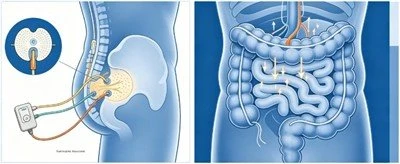
A temporary stimulation electrode is placed near the selected sacral nerve. During the test period, the clinical team evaluates urinary symptoms and the patient's response to stimulation.
The test period is commonly 7–14 days, depending on clinical circumstances and the treatment protocol.
Evaluation may include:
- Urinary symptom diaries
- Changes in urinary retention or incontinence
- Urodynamic measurements
- Other relevant clinical findings
Symptom improvement of 50% or more is commonly used as a reference when considering permanent implantation. The decision is based on the overall clinical assessment.
Stage 2: Permanent Implantation
Patients with a satisfactory response during test stimulation may be considered for permanent implantation.
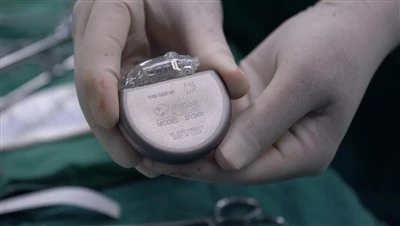
An implantable pulse generator delivers electrical stimulation through an electrode positioned near the sacral nerve. Following implantation, clinicians can adjust stimulation parameters according to urinary symptoms and treatment response.
SNM Device Options for Neurogenic Bladder Treatment
The treatment program lists three implantable pulse generator options, together with electrode leads, test stimulation equipment, and programming devices.
| Device / Model | Specifications and Configuration |
|---|---|
| Implantable Pulse Generator G132 | 50 × 50 × 6.8 mm; 25 g; 1850 mAh battery; non-rechargeable; 2-year warranty |
| Implantable Pulse Generator G131 | 47 × 51 × 10.5 mm; 35 g; 2500 mAh battery; non-rechargeable; 2-year warranty |
| Implantable Pulse Generator G134R | 55 × 52 × 11 mm; 36 g; rechargeable; 10-year warranty |
| Implantable Electrode Lead Kit L331 | L331-28, L331-33, and L331-41 |
| Patient Programming and Charging Device R831 | Integrated programming and charging functions; supports remote programming |
| Patient Programmer C733 | Supports patient programming, remote programming, constant-voltage stimulation, and constant-current stimulation |
| Test Stimulator T902 | Bluetooth and near-field coupling communication modes |
| External Programmer PSM1001 | Bluetooth communication with an effective distance of 10 m; near-field coupling communication; stores programming adjustment history |
The three implantable pulse generators differ in physical dimensions, weight, battery capacity, and charging configuration. G132 and G131 use non-rechargeable batteries, while G134R is rechargeable.
The appropriate device and electrode configuration are determined by the clinical treatment plan and physician assessment.
Remote SNM Programming and Follow-Up Care
Follow-up is an important part of sacral neuromodulation management, particularly for international patients who return to their home countries after treatment.
Our published service arrangements include:
- Remote programming and stimulation parameter adjustments where applicable
- Post-treatment follow-up
- Ongoing communication about recovery and treatment-related questions
- Annual check-ins as part of continuous patient support
The clinical team offers remote programming for eligible SNM systems, allowing device settings to be adjusted without requiring routine return travel to China.
Clinical Team and Specialized Experience
The clinical team is led by Dr. Zhang Yifei, an Associate Chief Physician in urology with more than 30 years of clinical experience.
His published professional profile records:
- More than 30 years of specialized clinical experience
- Over 1,000 sacral neuromodulation procedures
- Leadership of a sacral neuromodulation clinical demonstration center
- Clinical experience in urinary control disorders and neurogenic bladder
The multidisciplinary approach brings together urology, neurourology, and rehabilitation-related expertise to assess complex urinary dysfunction and treatment suitability.
International Patient Consultation
International patients can begin with a remote medical record review before arranging an in-person evaluation in China.
The consultation process includes:
- Submit available medical records, imaging, urodynamic results, and previous treatment information.
- The clinical team reviews the submitted information and conducts an initial assessment.
- Discuss potential treatment options and whether further examinations are required.
- Arrange an in-person medical evaluation and treatment consultation in China when appropriate.
- Discuss follow-up and remote programming arrangements after treatment.
The published About Us service information states that a written remote second-opinion assessment is generally provided within 1–3 business days. Remote assessment is based on submitted records and does not replace an in-person diagnosis.
Request a Neurogenic Bladder Treatment Assessment
If you are considering medical management or sacral neuromodulation for neurogenic bladder, send us your existing medical records for an initial review.
Please include your main urinary symptoms, neurological diagnosis, previous treatment history, and available examination results. Our team can review the information and explain the potential consultation and treatment arrangements.
Contact us to request a remote medical record review and discuss the next steps for neurogenic bladder care.
Hot Tags: medical management of neurogenic bladder, China, price, pricelist, quotation, cost, neurogenic bladder nerve electrode, neurogenic bladder neurostimulator system, neurogenic bladder sacral nerve stimulation device, neurogenic bladder stimulation implant components, neurogenic bladder therapy device, Neurogenic Bowel and Bladder Dysfunction