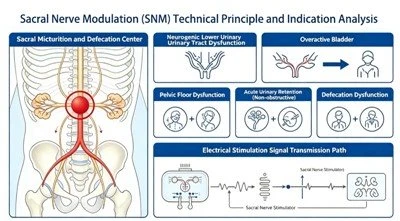
Abnormalities in pelvic floor function are caused by nerve and/or muscle abnormalities.
1. Outlet obstruction constipation
(1) Outlet obstruction constipation: Patients experience extreme difficulty passing stool through the anal canal and strain during defecation. The etiology and mechanism are not well understood, but it may be a group of multifactorial functional disorders. ① Anal spasm: Difficulty in defecation is due to the inability of the pelvic floor striated muscles, mainly the puborectalis muscle and the external anal sphincter, to relax. Sometimes, the activity of the puborectalis muscle is enhanced during defecation, resulting in loss of coordinated movement, leading to incomplete descent of the perineum, causing difficulty in defecation, incomplete defecation, and anal pain. ② Adult megacolon: This is due to the lack of certain ganglion cells at the anorectal junction, making it difficult for stool to reach the rectum and trigger the anorectal inhibitory reflex, thus making it difficult to initiate defecation. ③ Anorectal sensory disturbance: Long-term excessive straining during defecation damages the perineal nerve, causing a dulled urge to defecate and an increased sensory threshold when the rectum is full and distended. It is often accompanied by impaired response of the external anal sphincter and the puborectalis muscle to rectal fullness and distension, resulting in difficulty in defecation. ④ Perineal Descent Syndrome: Caused by weakened pelvic floor muscles, possibly due to aging or nerve damage. During childbirth, the sacral nerves (S3 and S4) innervating the puborectalis muscle are easily damaged. Once the pelvic floor muscles are weakened, any exertion can cause significant perineal descent, leading to rectal dilation and excessive rectal mucosa protruding into the rectum. This often results in difficulty defecating, frequent urges to defecate, and straining during bowel movements.
2. Rectocele
Rectocele is the herniation of the anterior rectal wall into the posterior vaginal wall. It may be asymptomatic, but most cases present with difficulty defecating. Some patients complain of anal pain, fecal leakage, anal bleeding, and other symptoms such as vaginal prolapse and urinary incontinence.
3. Rectal Prolapse
Rectal prolapse can manifest as anterior rectal mucosal prolapse. Excessive straining can cause rectal intussusception. The top of the intussuscepted or prolapsed rectum becomes tightly trapped in the pelvic floor, causing trauma and leading to a solitary rectal ulcer. It can cause bleeding, anal pain, and defecation difficulties.
4. Chronic Anal Pain Syndrome
This mainly includes levator ani syndrome, spasmodic anal pain, coccyx pain, perineal descent syndrome, and chronic idiopathic anal pain. Among these, spasmodic anal pain is caused by spasms of the levator ani and coccyx muscles; hereditary internal anal sphincter myopathy may also be related to pain. Additionally, sigmoid colon contraction may also play a role. Coccyx pain is functional, and its etiology is unclear.
5. Idiopathic Fecal Incontinence
Also known as neurogenic fecal incontinence, its cause is progressive damage to the nerves innervating the pelvic floor striated muscles and external anal sphincter, as well as decreased function of the internal sphincter. Most patients exhibit decreased resting anal pressure and constriction pressure, and abnormal electromyography of the external anal sphincter, suggesting that neuropathy is the underlying cause.